


Want to learn how to drive more blog traffic? I’ve got you covered.
The blogging game has changed. AI disruption, SEO volatility, and shifting algorithms have made it harder than ever to get eyes on your content.
But there’s good news: It’s still possible with the right strategy.
In this guide, I’ll walk you through 30+ actionable ways to drive traffic to your blog through search, social, email, and more.
These are the exact tactics I’ve used to reach hundreds of thousands of monthly readers—and they still work today.
Search engine optimization (SEO) strategies
The best way to consistently drive long-term traffic to your blog is through organic search.
That’s because, unlike social media traffic, which spikes and fades, search traffic tends to compound over time.
Every so often, Google will throw out an update that doesn’t work and causes problems. This happened with Penguin. Which they later sorted out. And it happened with the HCU (which was nothing to do with content quality)—they still need to sort that one out.
But in general, SEO traffic will tend to be the most consistent.
Here are some search engine optimization (SEO) strategies that can help you to rank your blog content and drive more organic search traffic to your site.
1. Target ultra-specific, low-competition keywords
It’s getting harder and harder to rank on Google for common search queries.
Artificial intelligence (AI) has flooded the internet with content, making the SERPs more competitive than ever.
At the same time, Google has shifted its focus toward authoritative sources, making it tough for smaller, niche bloggers to compete.
The answer: Stop trying to rank for competitive keywords if you aren’t able to compete for the same broad topics that everyone else is covering.
Instead, focus your attention on ultra-low-competition, long-tail keywords that hardly anyone else is targeting.
These kinds of keywords might only get a fraction of the monthly searches broader keywords get, but you stand a much better chance of ranking for them—and getting traffic.
Here’s how to go about it…
First, open up Google and start typing in a broad, competitive keyword that you’d like to rank for if you could, and look at the suggestions that pop up.
For instance, let’s say you have a blog about personal finance. ‘Retirement planning’ is a popular query that would probably drive a ton of traffic.
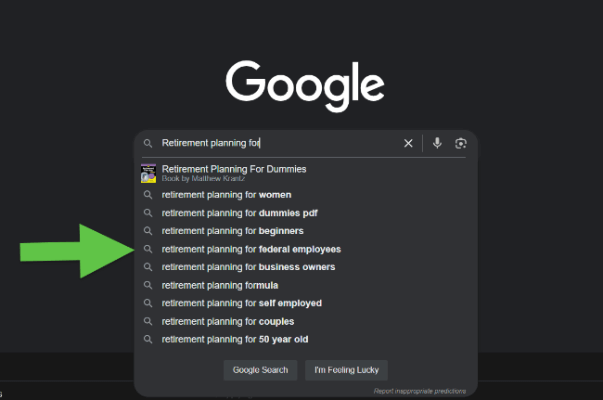
If we type that in, autocomplete brings up a bunch of suggestions like ‘Retirement planning for business owners’, ‘Retirement planning for couples’, and so on.
These are long-tail keywords. They’re already a little better, but they’re still too competitive—so let’s go one step further.
Open up SE Ranking’s keyword suggestion tool and enter some of the long-tail keywords we just found.
In the Keyword Ideas report, you’ll see a huge list of ultra-specific, long-tail keywords that have very low competition.
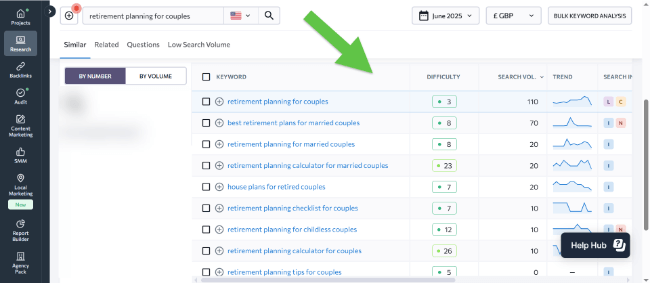
For instance, I can see in the report that ‘retirement planning checklist for couples’ and ‘retirement planning for married couples’ have virtually no competition, making them easy to rank for.
These are the kind of keywords you want to target as a new blogger to drive long-term traffic.
Note: It doesn’t have to be SE Ranking. You can use any other good keyword research tool to get long-tail suggestions.
2. Reverse-engineer your competitors
If other sites in your niche are getting a lot of traffic, it makes sense to do what they’re doing. After all, if it’s working for them, there’s no reason it shouldn’t work for you.
That’s where competitive analysis comes in. You can use SE Ranking for this, too.
Sign up, enter your domain, and open up the My Competitors tool. Then, hit Find My Competitors to bring up a list of sites in your niche that get the most traffic.
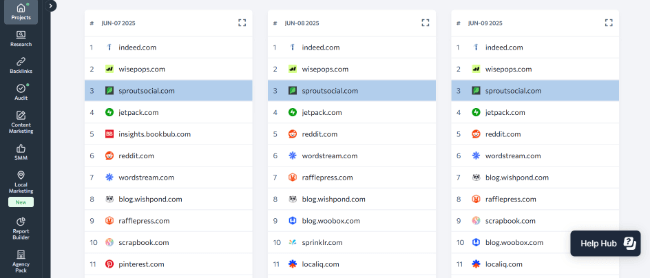
Next, open up any competitor site in SE Ranking’s competitive research tool for a complete SEO report on their performance.
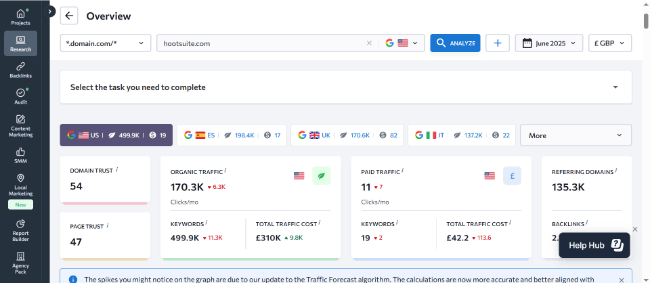
You’ll be able to see which keywords, blog posts, and backlinks are driving the bulk of their traffic. You can then use those insights to reverse-engineer their strategy.
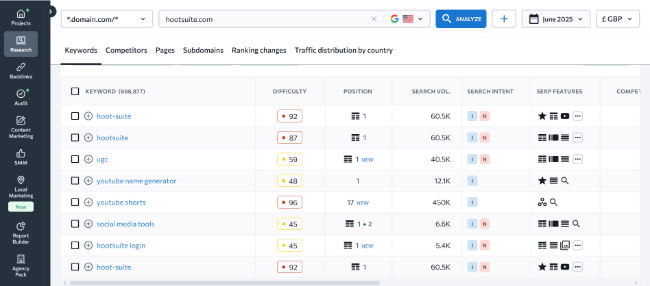
For instance, if you see that one particular blog post/keyword is driving tens of thousands of visits a month to their site, you can create a similar blog post yourself (but make yours even better) to try to rank alongside them and steal some of that traffic.
Likewise, if you notice they’re getting a lot of referral traffic from another website, you can target that website in your outreach/link-building campaigns.
Basically, you’re looking at what worked for them and doing the same—cherry-picking the best bits from their strategy and incorporating them into your own.
3. Optimize every post with the right tools
Writing great blog content isn’t enough, you also have to optimize every post you write for search engines to give them the best chance of ranking and driving traffic.
You can use any content optimization tool for this. Frase and SE Ranking are both great options—their built-in content editors and writing assistants make on-page optimization fast, easy, and effective.
Start by entering your target keyword in the content editor.
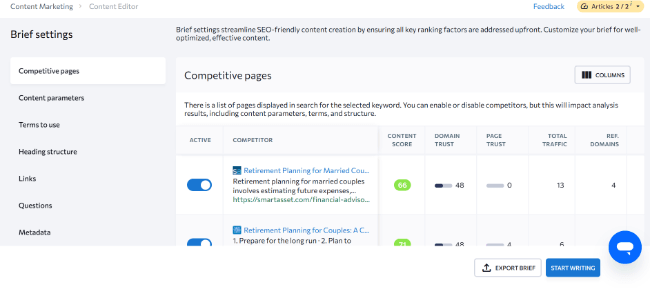
The tool will then analyze the top-ranking content for that term and generate a brief with everything you need to compete: recommended word count, suggested terms to include, link suggestions, and content structure guidelines.
As you write inside the editor, you get a real-time content score, showing how well-optimized your post currently is and telling you what you need to fix.
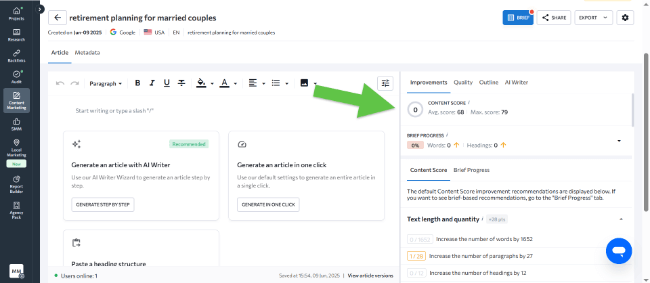
It highlights things like missing keywords and headlines and offers tips to help you improve grammar and readability.
Once your score is in the green, you’ll know your post has the best possible chance of ranking and pulling in long-term organic traffic.
4. Publish helpful content with personal insights
Since Google’s HCU update, it’s been trying to weed out low-value, AI slop from the SERPs. It wants to show searchers original, reliable content from real human experts.
Yes, it’s true that they’ve essentially used the algorithmic equivalent of napalm when they needed surgical precision. So, I’ll try to keep my anti-Google feelings contained for this part of the post.
Anyway…
What does this mean for bloggers? It means it’s no longer enough to write generic answers to questions that AI could answer better.
Now, if you want traffic from search engines like Google, you have to provide something AI can’t—genuinely valuable content packed with your original thoughts and unique insights.
But it’s important I be clear here:
Google cannot tell the difference between good content, bad content, or flat out AI slop. But usually people can. And its the engagement signals from users that can influence how Google ranks content.
So, it’s humans you need to impress with your content.
To do that, try including anecdotes, case studies, or lessons learned from your own experiences in the posts you write.
Instead of writing ‘How to grow an email list’, write ‘How I grew my email list to 10,000+ subscribers (and what I’d do differently)’. Real-life stories like these build trust and set your content apart.
If your blog post sounds like it could have been churned out by ChatGPT, it is less likely to rank well. But if you can mix genuinely helpful info with your voice, your data, and your experiences, it will be more likely to rank higher.
Note: You’ll still need to do all of the basic SEO stuff like optimizing your content with tools like SE Ranking or Frase. But, your priority needs to be on writing your content for human consumption. This will lead to more traffic, links, and all of that good stuff.
5. Demonstrate expertise across your site
As I mentioned earlier, Google’s algorithm is more likely to reward content from real people with real knowledge.
So, if you want your blog posts to rank and drive traffic, you need to show that you know your stuff and demonstrate expertise across your whole website—not just in your posts.
Start with your About page. This is one of the first places Google (and your readers) will look to understand who you are and why they should trust you.
Use it to demonstrate expertise by highlighting your credentials, experience, and anything that proves you’re an authority in your niche. Have you been featured in publications? Worked in the industry? Got a track record of results? Say so.
Here’s Blogging Wizard’s about page, for reference.
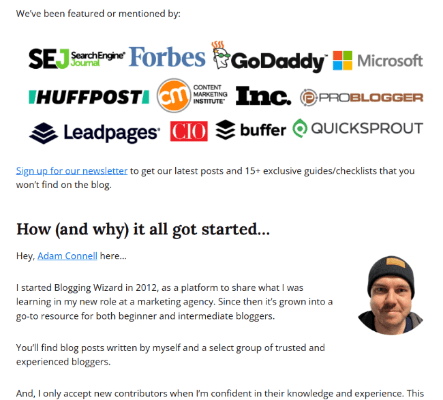
As you can see, I use it to explain my approach to blogging, outline my experience, highlight publications we’ve been featured on, and establish EEAT (Experience, Expertise, Authoritativeness, and Trustworthiness).
You might want to add a short author bio to the end of every blog post, too. Link to your About page from your bio and include a headshot if possible. This not only humanizes your blog, but it also reinforces your credibility site-wide.
Note: EEAT is not a ranking factor so this won’t help you rank. But it will give people more reasons to trust your blog. This trust will then in turn lead to more links and returning visitors which is great because these are rewarded by Google’s algo. And there’s a bit more to the “Experience” part than just what you write on a page.
6. Identify SEO opportunities with Frase
One of the easiest ways to grow your blog traffic is by optimizing content you’ve already published.
Frase makes this simple with its Content Opportunities feature.
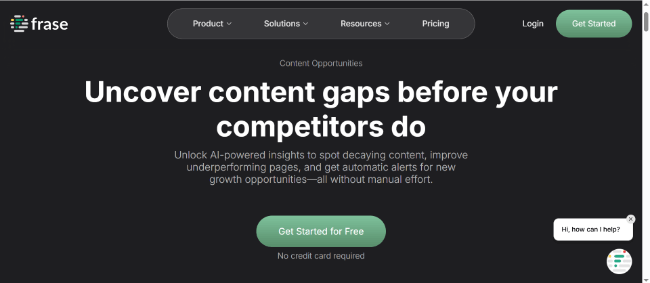
Once you connect your Google Search Console (GSC) account, Frase analyzes your existing posts to uncover low-hanging SEO wins, like keywords you’re already ranking for but not yet dominating.
It looks for posts sitting on page two or three of the SERPs and shows you exactly which terms to target and how to optimize them to push them higher.
It also flags content that needs attention (like decaying pages that have dropped in clicks or rankings), uncovers underperforming content with high impressions but low CTR, and suggests new keyword ideas based on trending terms.
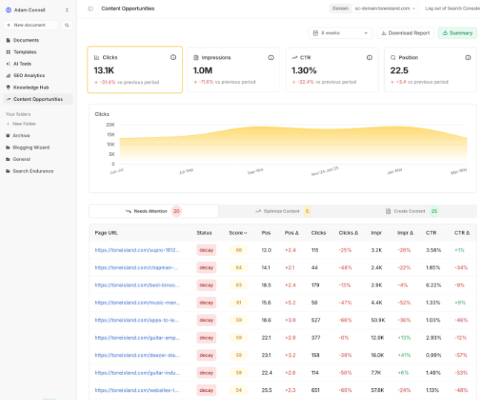
Armed with that knowledge, you can jump straight into refreshing content that needs attention inside Frase’s editor. You can even prioritize pages by traffic potential and difficulty, so you’re always working on what matters most.
This is one of the most efficient ways to boost rankings and drive more traffic from posts you’ve already published.
Note: You could get a lot of the same insights you get with Frase manually inside GSC, but the process is clunky and time-consuming. Frase does it in minutes, turning raw data into clear, actionable tasks and quick-win opportunities.
7. Refresh old content periodically
Freshness is still a big ranking factor. Google prefers to rank content that’s been posted or updated recently over older articles, especially for topics that evolve over time.
What does this mean? If your blog post is a few years old and hasn’t been touched since, it’s likely slipping down the rankings, which means it isn’t driving as much traffic as it could be.
That’s why I’d recommend making it a habit to update your existing content at least once a year.
Look for outdated stats, broken links, and old information that’s no longer relevant or correct.
When you find a post with any of the above, update it to add new insights and bring it up-to-date. Add internal links to newer articles, and tweak your headline or meta description if needed.
Keep in mind that you don’t have to rewrite the whole thing. Even small updates—like adding a new section or image—can signal to Google that the content is fresh and still relevant, and bag you a quick SEO win.
And if you’re using tools like Frase or SE Ranking, they’ll help identify which posts are losing traffic, so you know exactly where to focus your efforts.
8. Run technical audits regularly
Even the best content won’t rank as well as it could if your site has technical issues holding it back. That’s why regular SEO audits are essential.
Start by checking out the Pages section in Google Search Console.
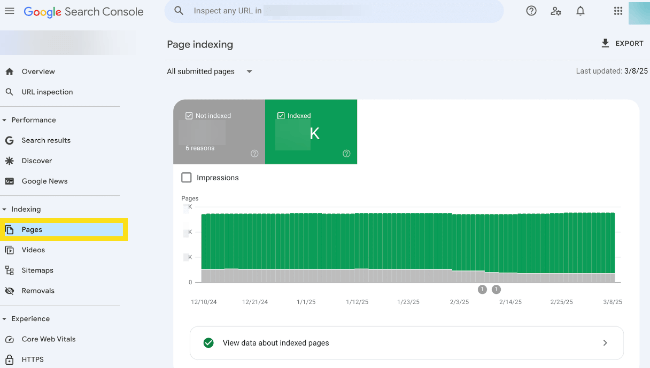
Look for errors like 404 not found pages that should be redirected, or pages accidentally set to noindex that you want ranking. Fixing these small issues only takes a few minutes, but it can have a big impact on your visibility.
For deeper insights, use a dedicated SEO auditing tool.
SE Ranking has a robust site audit feature that scans your whole site for problems like broken links, crawl issues, and duplicate content.
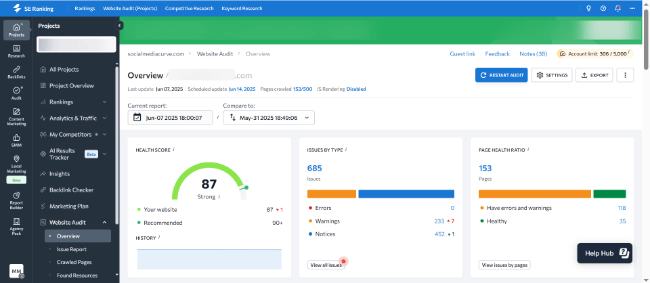
If you prefer a more engaging approach, Morningscore turns auditing into a game, rewarding you with points for fixing problems and leveling you up as you improve your site.
I’d recommend running a full audit at least once a quarter. Catching and fixing issues early ensures your content performs at its best and delivers maximum traffic.
9. Stay in your lane and keep topical focus tight
The dumbsterfire of an algo update that Google named the “Helpful Content Update” (HCU for short) was not what they claimed it was.
And it was ironic that their guidance that was released with this update was extremely unhelpful.
Anyway, this update wasn’t what they said it was. It was later revealed at Google’s 2024 Creator Summit that the update had nothing to do with the helpfulness of content.
They just gaslit publishers into thinking their content wasn’t good enough when they have no idea how to algorithmically determine what is or isn’t quality content.
In reality, the update graded based on how well they stuck to their core topic. Google would of course choose what it thought the site’s core topic was and judge them accordingly. In the Content Warehouse API leak, there is reference to a modifier known as the siteFocusScore.
Sites would then be demoted in search based on how far they strayed outside of their lane.
So, what does that mean for bloggers and creators like us?
We’ve got to pick a topic and stick to it.
No more multi-topic blogs or authority sites. We pick a